

Playa Blanca, Puntarenas: Costa Rica’s Closest White Sand Beach to San José
Table of Contents
When I need a quick escape from the city, Playa Blanca is one of my go-to spots. It’s the closest white sand beach to San José, which makes it a practical option for a weekend trip. What keeps me coming back, though, is the wildlife. Every time I visit, I spot monkeys, iguanas, and sometimes even scarlet macaws flying overhead. The ocean is just as full of life—I’ve seen schools of fish, manta rays, moray eels, and even whales during their migration season. The water is crystal clear, and when the visibility is good, it really feels like you’re part of the environment. Getting there takes a little effort since public access isn’t the easiest, but in my experience, it’s always worth the trip.
Getting there
By Car
If you’re driving from San José, Playa Blanca is about 90 kilometers away, and the drive usually takes around an hour and a half. But, as with most places in Costa Rica, traffic can change things. If you’re leaving during peak hours, especially on weekends or holidays, you might be looking at a little over two hours on the road.
The fastest and most common route is to take Route 27. After that, you’ll connect to Route 34, also known as the Costanera. This route is well paved and in good shape, which makes the trip easier, even if it gets a bit busy near beach towns during the high season.
You could also take Route 1 and Route 3, which pass through the mountains. That drive is more scenic, but slower. It usually takes close to three hours, so I only recommend it if you’re not in a rush and the traffic on route 27 looks terrible. Yes, this is possible!!!
If you’re coming from Guanacaste, be ready for a longer trip. From Liberia, the drive is about 187 km. You’ll start on the Interamerican Highway (Route 1), then connect to Route 27 and finally Route 34. These highways are also in good condition, but some parts of Route 1 may have construction going on, so keep that in mind and check traffic updates if you can.
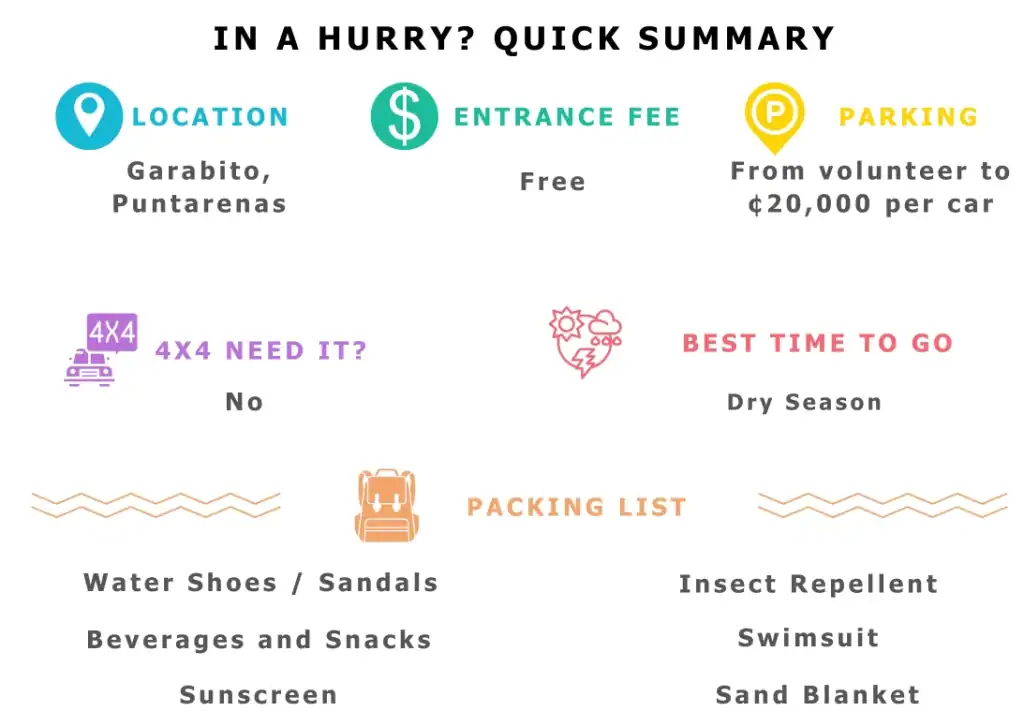
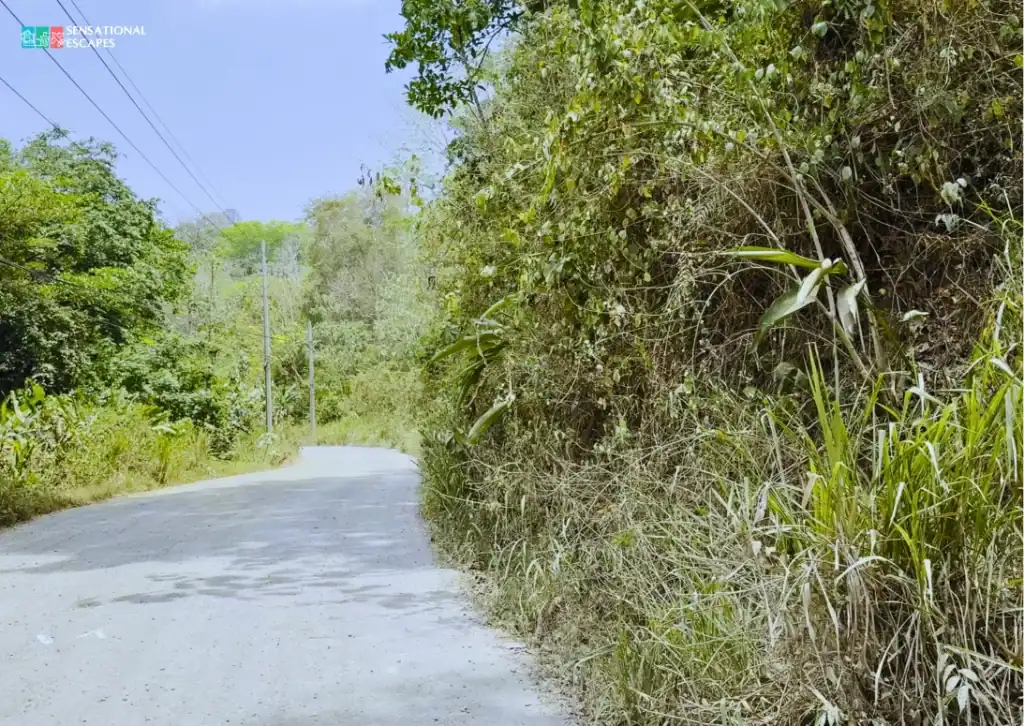
Once you get near Playa Blanca, the entrance to the public access road is in the Quebrada Ganado area. Look for a small turn located just 25 meters from a seafood restaurant called Ricuras del Mar. From there, the road is partly gravel, but you don’t need a 4×4 to drive in. Just before you reach the residential area and hotels near the beach, the road becomes paved again.


By Public Transportation
There is no direct bus from San José or Guanacaste to Playa Blanca. The best option is to take a bus heading toward Jacó or Quepos and ask to get off at the Quebrada Ganado / Punta Leona stop along Route 34. This is the closest public bus stop to Playa Blanca.
From there, the beach is still about 6 kilometers away, and walking isn’t really a good idea. There are no sidewalks, and the road isn’t meant for pedestrians. At that point, you’ll need to take a taxi or rideshare service like Uber or Didi to reach the beach entrance.
If you prefer to skip the bus altogether, you can take a taxi or rideshare directly from your starting point. From San José, the price usually starts at around $150. From Guanacaste, it can go up to about $260. If you’re coming from Jacó, it’s much cheaper, around $15.
About the Parking
Parking at Playa Blanca depends on how you enter the area. If you’re using the public access road, you have three main parking options to choose from: the Punta Leona Hotel lot, a small public gravel lot, or a private parking lot with shuttle service.
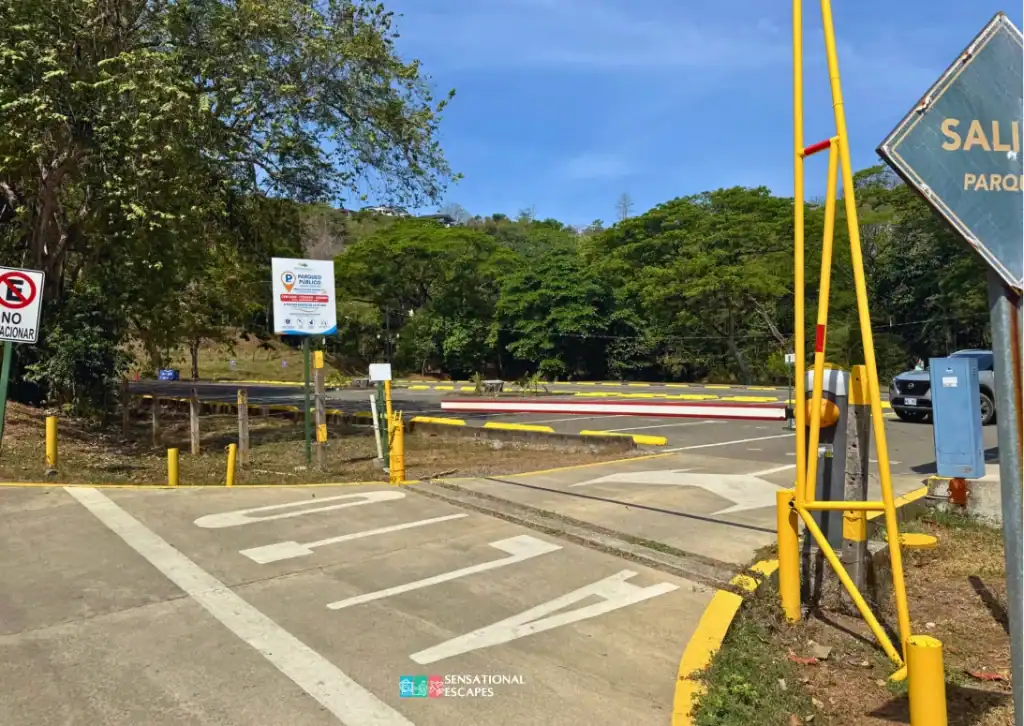
The Punta Leona Hotel parking has two different rates. From Monday to Thursday, it costs ¢10,000 per car, while on Friday, Saturday, and Sunday the price goes up to ¢20,000. This fee includes access to bathrooms and showers. If you’re not parking there but still want to use those facilities, it’s ₡2,500 per person, and that covers two uses.
The small public parking area located on a gravel road close to Playa Mantas. It’s free to park there, though there’s usually a local person watching over the cars. The payment for his service is voluntary, and many people give a small tip. Keep in mind that this lot fills up fast, especially on weekends. I recommend getting there before 8 a.m. if you want a spot.

A third option is using a private parking area near the nearby condominiums. They typically charge between ¢8,000 and ¢10,000 per car and often include a shuttle service to and from the gravel parking lot, which can be very convenient if the other lots are full.
If you’re entering Playa Blanca as a guest of the Punta Leona Hotel, you can use any of their internal parking lots at no extra cost. That includes one located less than 100 meters from the beach, which is very convenient.
Access to the Beach
There are two main ways to access Playa Blanca: through the Punta Leona Hotel or by using the public access route. Each option has different conditions, so it depends on how you plan your visit.
Access through the hotel
If you’re a guest at the Punta Leona Hotel or staying at some of the properties owned by the hotel, you have direct access to Playa Blanca.
You don’t need to stay overnight, though. The hotel offers a day pass for visitors, which allows access to the beach and hotel facilities from 7:00 a.m. to 5:00 p.m. The day pass includes breakfast and lunch buffets, and costs $85 per adult and $42.50 for children between 6 and 11 years old. You do need to reserve the day pass at least 24 hours in advance. Once inside the hotel property, you can park near the beach or use the hotel’s private transport service to Playa Blanca at no extra cost.
Access through public access
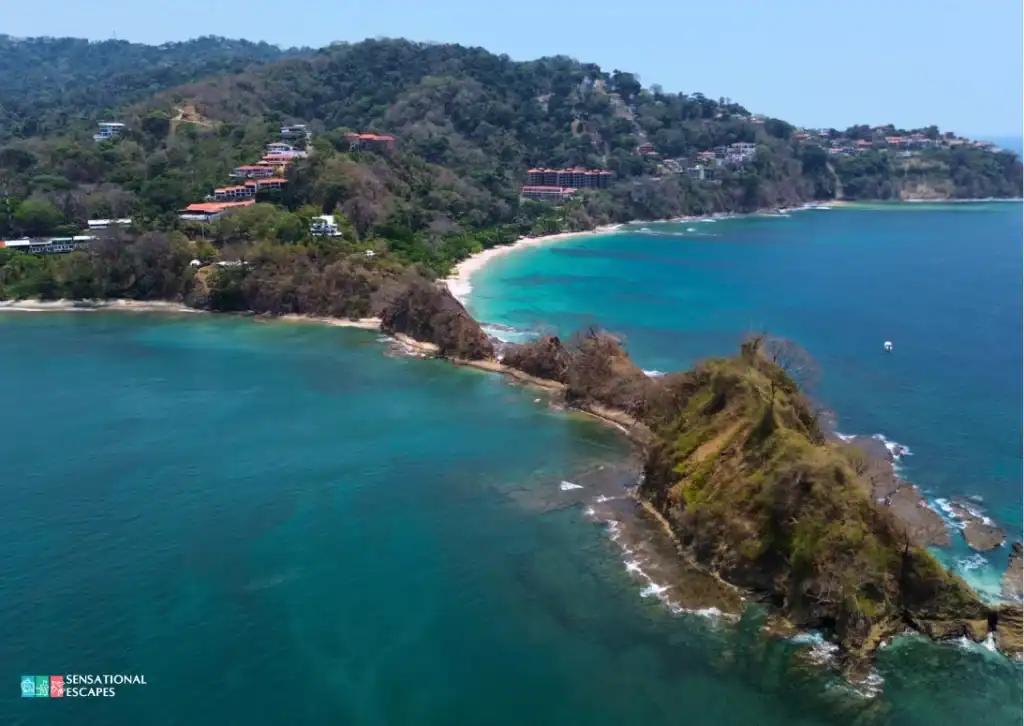
For public access, you need to first walk through Playa Mantas. From there, you cross the islets that separate Playa Mantas from Playa Blanca. This walk should only be done during low tide. The islets become unsafe at high tide because the water covers the access points.
There are two ways to cross the islets:
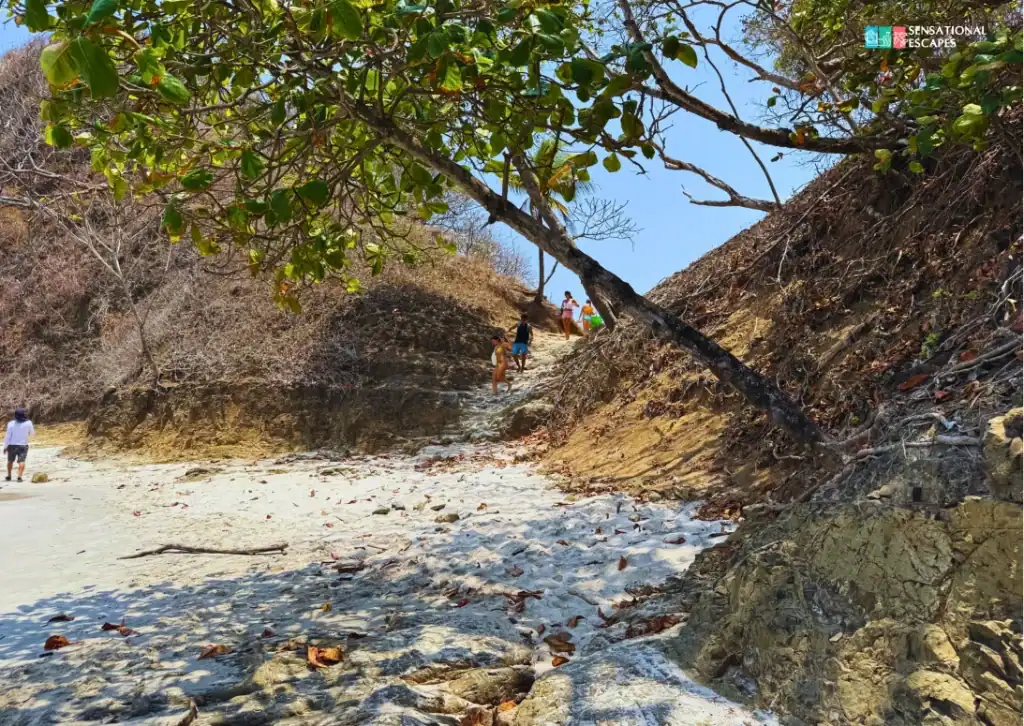
- First access point: This is about a 500-meter walk (roughly 10 minutes) from the public parking lot. You’ll need to climb part of the islet, and although there are some natural holes that help like steps, the path has loose dirt and can be slippery. It’s best to wear good shoes and walk carefully.
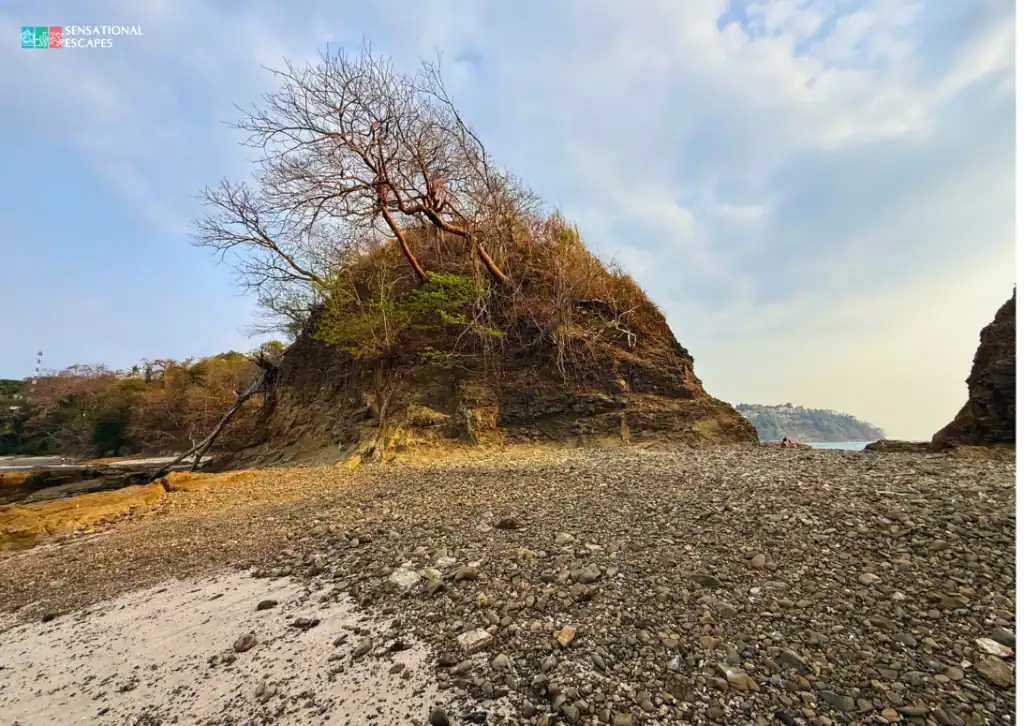
- Second access point: This is a bit longer, about 600 meters from the public lot. You’ll walk further along the islets and cross a narrow strip that divides them. This side is easier to walk, but has more rocks and shells, so make sure you’re wearing good shoes or sandals that can handle sharp surfaces. Although the road is longer, many people prefer it because it is easier to cross.
Both of these routes are marked on the tourist map below, so you can choose the one that works best for you.
About the Beach
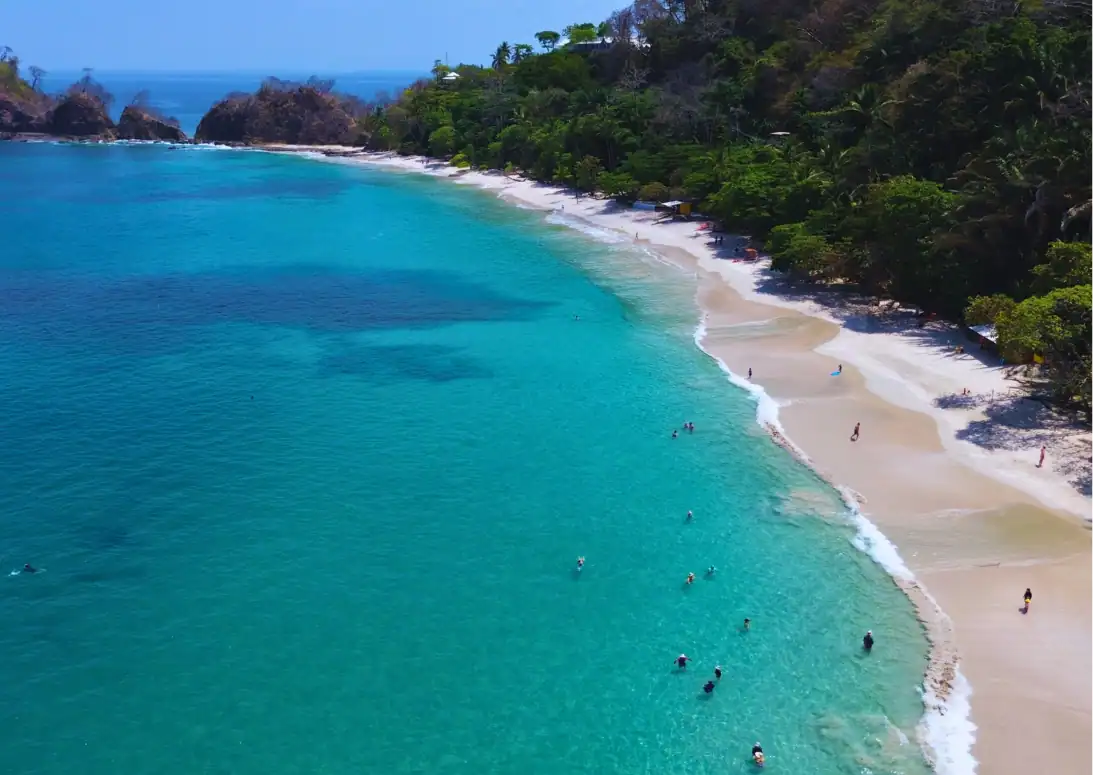
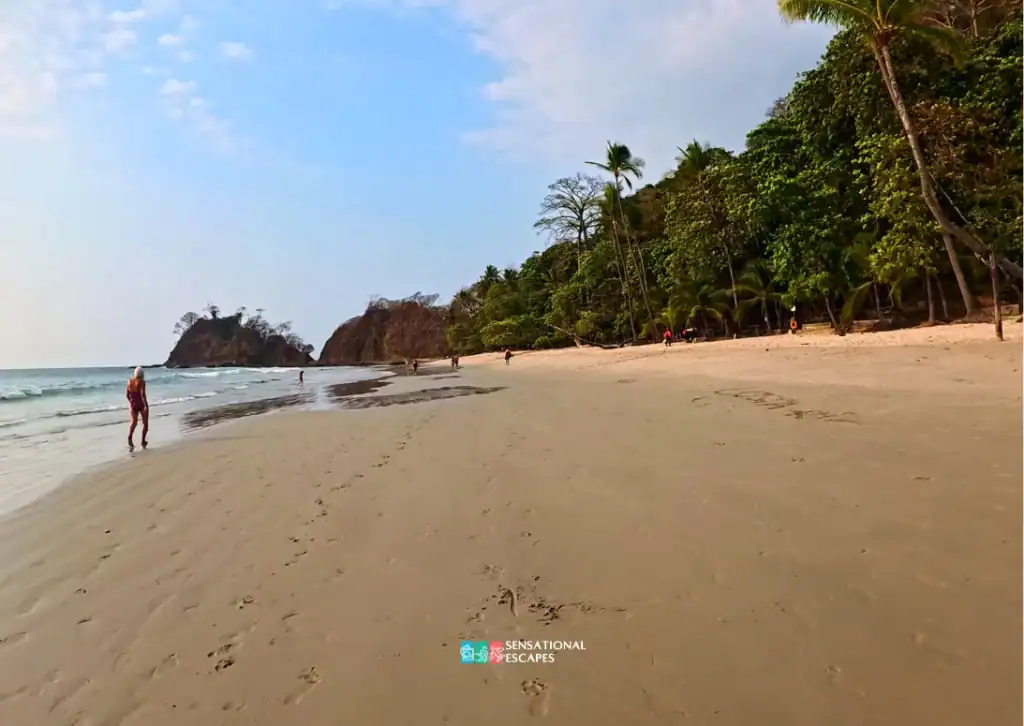
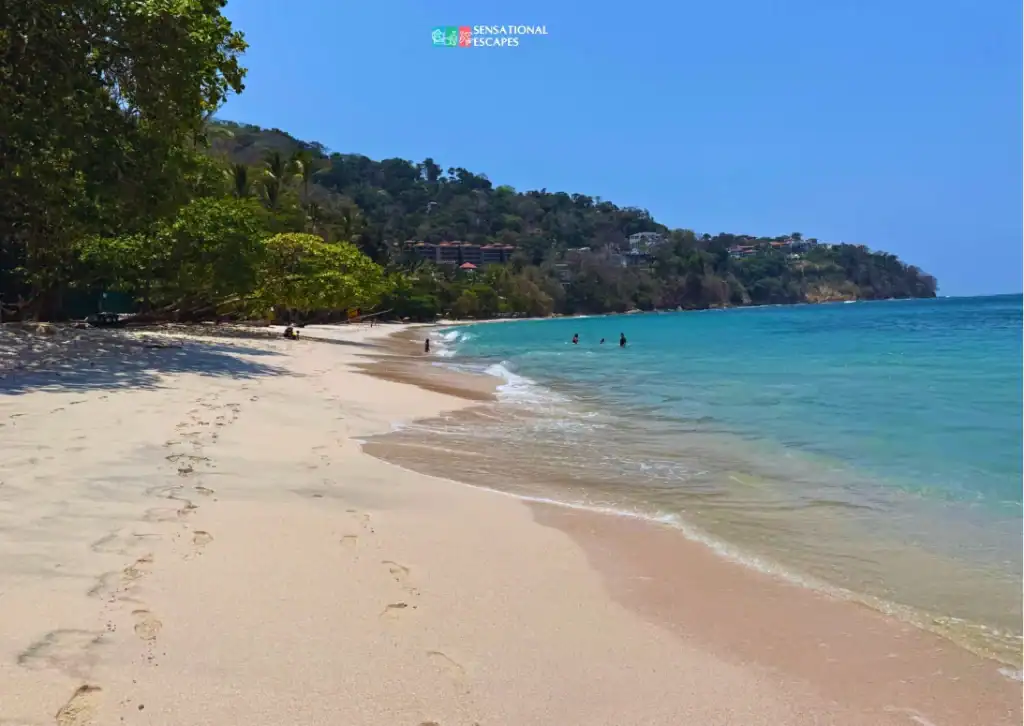
Playa Blanca stretches about 600 meters and is known for its soft white sand and usually clear, calm waters. It’s a beach I’ve been to many times, and it’s especially popular for snorkeling, diving, and open water swimming. I’ve gone several times with friends who are either getting their diving certifications or preparing for competitions and conditions were usually very good for both activities.
If you enjoy snorkeling, I recommend the southern side of the beach, near the rocks. That’s where I’ve seen the most marine life, including colorful fish, manta rays, and moray eels. It’s easy to spend an hour or more just floating and watching what moves beneath the surface.
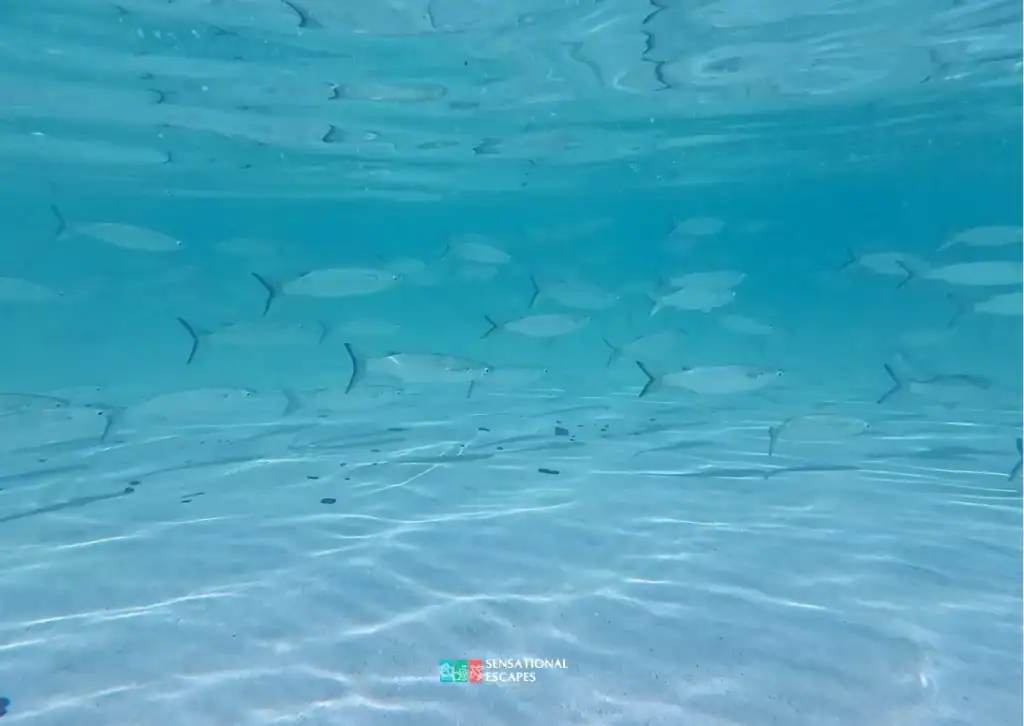
Another interesting feature is the underwater museum, created by the Punta Leona Hotel. It’s the first of its kind in Central America, made up of different underwater sculptures. It was designed to support the growth and conservation of the nearby coral reefs, and it adds something different to the snorkeling experience.
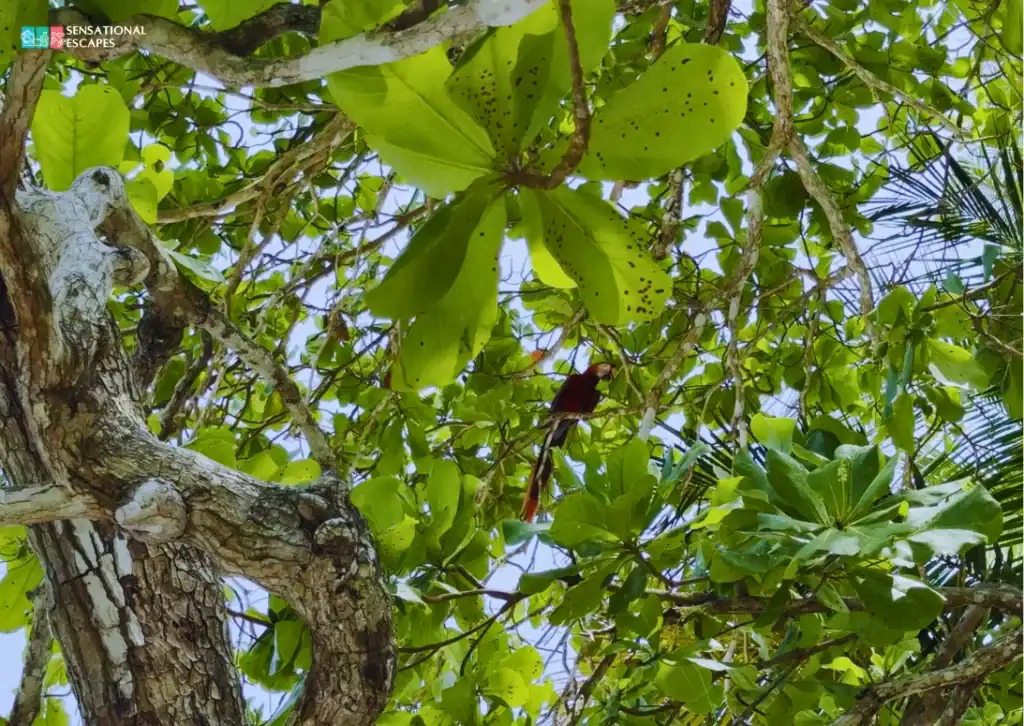
One thing I really like about Playa Blanca is how many trees line the back of the beach, providing natural shade throughout the day. But these trees aren’t just good for staying cool—they’re also home to white-faced monkeys and scarlet macaws. I’ve never gone to Playa Blanca without spotting both.
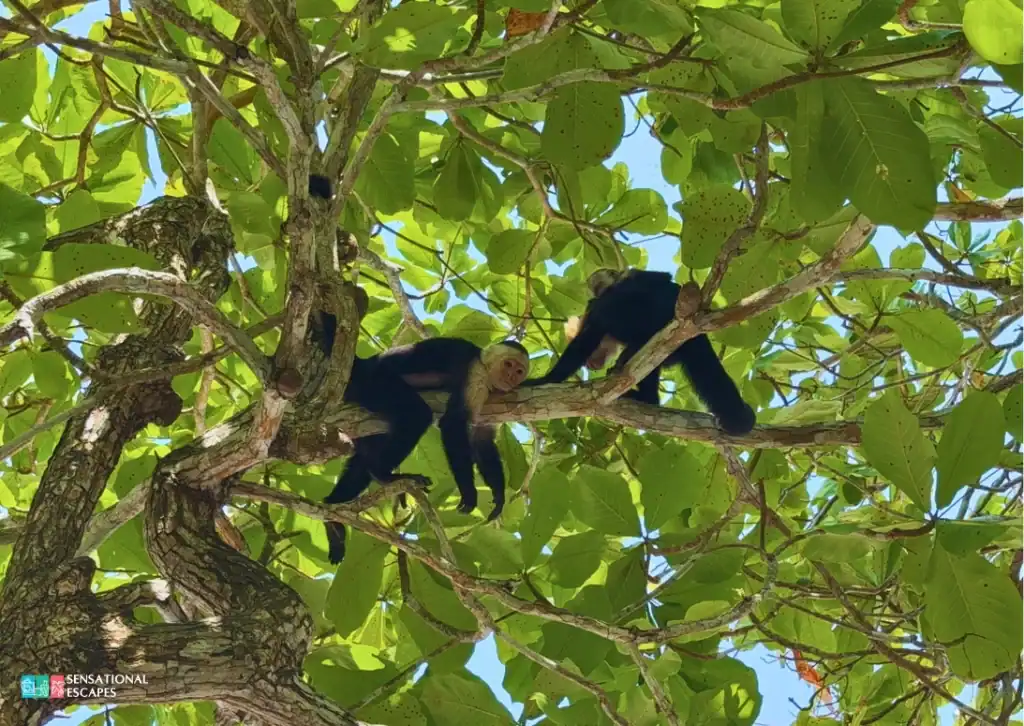
The monkeys can get a bit too curious though, especially around food. It’s important not to leave snacks out and, most importantly, never feed them, not just because it’s illegal in Costa Rica, but also because it puts the animals at risk.
Scarlet macaws are very common in this area. One reason is the proximity to Carara National Park, and another is a conservation program run by the hotel, aimed at increasing their population. If you look up while you’re relaxing on the beach, chances are you’ll see a pair flying by or hear them calling from the treetops.
Although the sea is usually calm, I’ve had a couple of visits where the currents were stronger, and the lifeguards put up yellow or red flags to warn visitors. So even though it’s generally safe, it’s smart to check the sea conditions before going into the water.
Tips for Visiting Playa Blanca
- Arrive early – If you’re using the public access, try to get there before 8:00 a.m. The small parking area fills up fast, especially on weekends.
- Bring cash – You’ll need it for public parking, and it’s also useful if you want to buy snacks, drinks, or tip local attendants.
- Be careful with monkeys. They’re fun to watch, but they can also steal food if you leave it out. Feeding them is not allowed in Costa Rica.
- Bring reef-safe sunscreen. The water is clear and great for snorkeling, but it’s important to protect the reef and marine life.
- Bring snorkeling gear: If you want to explore near the rocks. Rentals aren’t available on site.
- Wear good shoes: Comfortable water shoes or sandals with grip, especially if you plan to cross the islets from Playa Mantas.
- Showers and restrooms. Playa Blanca has these facilities, but they are only available for hotel guests.